Speech and Language Therapy + Movement of Yoga = Talk Yoga!
  • Home
  • Certification FAQs
  • Talk Yoga™ Courses
    • Talk Yoga™ Online Certification
  • Talk Yoga Instructors
  • About Us
  • Materials
  • Membership Network
  • See Talk Yoga in Action Plus Freebies!!
  • Our Blog
  • Talk Yoga in Your School
  • Benefits and Research
  • Media Appearances
  • Contact Us
  • Work with Us

Speaking of Talk Yoga™

breathing and "R" Articulation Therapy: Why speaking on the exhalation matters

4/11/2025

14 Comments

 
Breathing Techniques for Better "R" Sounds: How Talk Yoga™ Makes a Difference

Through mindful movement and guided breath work, kids learn how to regulate airflow, reduce tension in the vocal tract, and create the conditions necessary for stable phonation and resonance. As their articulation improves, something else shifts too—their confidence. Children who once hesitated to speak up begin to find their voice, both literally and emotionally.

Mastering the "R" sound can be a major milestone. For many kids, it’s not just about saying “rainbow” correctly—it’s about being understood, participating fully in conversations, and feeling proud of how they sound. When we use yoga to promote breath control and coordinated speech, we’re not just addressing a speech goal—we’re nurturing a child’s sense of self.

But what if the key to unlocking better "R" production lies not just in tongue placement, but in the breath itself? In this post, we’ll explore how breath control plays a vital role in its production and how Talk Yoga™ integrates breath, movement, and mindfulness to help children speak more clearly—and confidently.

At Talk Yoga™, we believe that breathing is the foundation of clear, connected speech. Using yoga-based breath practices, we help children develop the control, coordination, and relaxation needed to support accurate articulation—especially for complex sounds like "R". 
Picture

Try These Amazing and Powerful "Talk Yoga™ Poses to Improve Articulation and Boost Breath Support!

Picture
💨 Seal Pose: How to Make Room for Big Breaths and Promote Deep Breathing!

 🌬️ Lie on your belly and lift your chest like a proud seal (traditionally called "sphinx" pose), resting on your forearms. As you breathe in, your chest gets bigger—like filling up a balloon! This helps you take deep, strong breaths as it creates more space in your chest, allowing the lungs to expand more fully. The position encourages diaphragmatic breathing rather than shallow chest breathing, which supports better breath control and stamina for speech.

😌 While you hold the pose, focus on your breath and notice how your body feels. Let your breath calm and relax you especially in the chest and shoulders—areas where kids may unconsciously hold tension that affects speech clarity.
Picture
Bubble Pose: Breathing with Big Movements!

🌬️ Deep Breaths In and Out:
As you stretch your arms open wide like a big bubble, you fill your lungs with big, fresh air. When you bring your arms back in, you gently squeeze the air out—just like giving your lungs a hug!
Stretching your arms out makes lots of space in your chest, helping your lungs grow strong and your breathing get better. Matching your arm movements to your breath helps your brain stay calm and your body feel balanced.

🗣️ Gets You Ready to Talk Clearly:
Strong, steady breathing gives your voice power and helps you say your sounds—like "R"—with more confidence! By combining deep breathing, controlled airflow, and coordinated arm movements, this pose not only strengthens breath support and builds a strong core but also prepares the body and voice for more accurate, confident speech.

REFERENCES:
Hixon, T. J., Weismer, G., & Hoit, J. D. (2018). Preclinical Speech Science: Anatomy, Physiology, Acoustics, and Perception (3rd ed.). Plural Publishing.References:

14 Comments

What is a Yoga "check in" and how does it support speech-language learning

4/9/2025

5 Comments


A yoga "check-in" 💭 is a simple, mindful moment—usually before or after a practice—where children pause to notice and express how they’re feeling in their body, mind, and emotions. It helps build self-awareness and sets the tone for their yoga practice, or allows them to reflect on how they’ve shifted by the end.

Yoga check-ins are a goldmine for supporting pragmatic language skills—the social use of language—which is so key in both early development and social-emotional learning. 
What Does a Check-In Involve?
After practicing Talk Yoga™, adults can model their own feelings first. This creates a "safe space" for kids and provides examples of emotional vocabulary like happy, hungry, or tired.
Check-ins can be done in a variety of ways depending on age, communication style, and goals:

Verbal Check-In
  • “How are you feeling right now?”
  • “Before yoga I was feeling _____, and now I feel _____.
  • “What’s one word to describe your body/mind/heart?”
  • Kids can share with a partner, the group, or during circle time.

Nonverbal Check-In
  • Thumbs up/side/down for mood.
  • Pointing to an emotion on a feelings chart.
  • Using colors, facial expressions, or gestures to show how they feel.

🧠 Why It Matters: Yoga check-ins create space for kids to slow down and listen inwardly. They promote the mind-body connection that yoga naturally nurtures. For speech and language development, check-ins also build vocabulary, expressive language skills, and social-emotional learning--foundational social communication skills.

From a speech-language perspective, check-ins are also a powerful tool for building pragmatic language skills:
  • 🧏‍♂️ Turn-taking: Sharing in a group or partner check-in gives kids real-time practice in listening and waiting for their turn to speak.
  • 🧠 Perspective-taking: Hearing how others feel helps children develop empathy and understand that different people can have different emotional experiences.
  • 🗨️ Topic maintenance: Responding to a prompt like “How are you feeling?” supports staying on-topic and using appropriate vocabulary to express thoughts.
In short, yoga check-ins blend mindfulness with meaningful language opportunities, making them a perfect bridge between movement, emotional regulation, and communication development.

5 Comments

Talk Yoga™ - A Non-traditional approach to speech and language therapy

9/9/2019

26 Comments

 
Picture
Talk Yoga™ is a new approach to your therapy sessions!
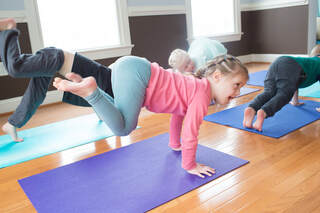
Expecting kids to sit nicely through a speech-language therapy session is often a challenge because kids are inherently built to move and explore their worlds as they learn. Have you ever wondered how you might intentionally harness childrens’ exuberant energy to enhance your therapy sessions?

While working in a school dedicated to serving children with language and learning disabilities, we often co-treated with OTs and PTs. We saw first-hand that movement was a catalyst to improve speech and language skills. We had an epiphany! We needed to combine the therapy tools we used daily with the movement we love dearly--yoga.  

As we tested out our theory, it became quite apparent that the practice of yoga provided a unique treatment of a variety of speech and language disorders.  Combining yoga and play with teaching speech and language developmental milestones broke the paradigm of traditional therapy.

Research suggests that movement (vestibular stimulation) activates cognitive abilities and enhances opportunities for novel, spontaneous language! Yoga engages the most basic child-centric learning style, tactile/kinesthetic learning, thus engaging the whole child. In children, gross motor skills develop first, then fine motor, and, finally, speech and language skills. Play develops the coordination and strength needed to support phonation and are foundations for speech and language development.

The Talk Yoga™ Program - express, play, and learn™!
The Talk Yoga™ program was designed to provide children and therapists with a way to address speech and language skills in a nontraditional way.  Talk Yoga™ is just like it sounds. We actually talk while doing yoga. Talk Yoga™ articulation poses match the movement of the articulators, create muscle memory, and physically active ways to practice speech sounds. Talk Yoga™ articulation poses, flows, and games also target expressive language skills such as vocabulary and MLU as well as receptive language skills such as following directions.

Research and Anecdotal Evidence.
Current anecdotal research from over three years of using Talk Yoga™ techniques in individual sessions and classroom settings indicates improved self confidence, ability to maintain focus, memory, placement and production of speech sounds, and overall receptive and expressive language skills.

One of our favorite success stories is Matthew--a sweet and energetic boy who literally never stopped moving.  When he was four years old, his parents were concerned about his articulation development. After several weeks of therapy, the traditional therapy plan was thrown out the window.  Matthew needed to move. Enter...Talk Yoga! Bring in the yoga mat and say good-bye to the sticker charts. Breathing techniques were practiced throughout each session. Matthew loved the poses, shared them with his family, and eventually, these poses became a part of his bedtime routine.  His focus and self-regulation in therapy gradually improved. This resulted in a calmer state, which resulted in more receptivity to learning. His parents and other family members began remarking that his speech was easier to understand.  

William is another example of Talk Yoga™ success!  When he began attending Talk Yoga classes, he presented with severe articulation errors as well as delays in expressive language.  Initially, the poses and other physical exercises were challenging for William. After three months of Talk Yoga™ classes, William’s pediatrician remarked that she noticed an incredible change in his speech and language. William’s confidence had also increased.  His overall strength and coordination increased. He needed fewer cues for speech sounds and language. He became a class leader and taught other children poses. Combining speech-language therapy and yoga was a recipe for success.

What comes next?
Speech-language therapy in isolation is an effective intervention for improving speech and language skills. Yoga in isolation is effective for improving focus, breathing, and self-regulation. Combining speech-language therapy with the movement of yoga is doubly powerful. Give it a try.  No more stressing about the copies you forgot to make, or the tokens you forgot to grab from your drawer. Grab a yoga mat (or not!), sit on the floor with your clients and get ready to have a blast making some noise talking while practicing yoga. 
Resources
Kenny, Molly (2002).  Integrated Movement TherapyTM: Yoga-Based Therapy as a Viable and Effective Intervention for Autism Spectrum and Related Disorders.  International Journal of Yoga Therapy, 12, 71.

Radhakrishna, Shantha; Nagarathna, Raghuram; Nagendra, H. (April 2010).  Integrated approach to yoga therapy and autism spectrum disorders.  Journal of Ayurveda and Integrative Medicine, 2, 120-124.
Suman, Renata.  (July-August 2000).  Yoga and Speech-Language Therapy.  Yoga Chicago.  
http://www.yogachicago.com/jul00/yogaandspeech.shtml

Cooper, Catherine (August 18-24 2010). A calming influence.  Nursing Standard 24, 24-25.
Satchidananda, Sri Swami (2012). The Yoga Sutras of Patanjali.

Desikachar, T. K. V.  (1999). The Heart of Yoga.

Paul, Rhea (2001).  Language Disorders From Infancy Through Adolescence. 

yogatimes.com


26 Comments

it's blogging time!  Speaking of talk yoga

9/9/2019

10 Comments

 
Welcome to our new blog!  We (Kim and Amy) have talked for a long time about starting a blog and finally, here we are!  We can't wait to start blogging about Talk Yoga and about how we use the Talk Yoga tools in our own therapy and really, in our own lives!  Leave us your comments, questions, ideas, anything!  

About month ago, Amy took an online course on feeding therapy by the incredible Diane Bahr (you can find the course here).  Amy reached out to Diane with a question about a particularly challenging client, and Diane immediately responded and has become a great mentor and friend.  She graciously invited us to write a blog for her own website, www.agesandstages.net, and it was featured this month!  

Visit Diane's website to view our very first blog post, and also to explore the many other amazing blogs, discussion topics, and Q&A page on Diane's website.  There is a wealth of information there, plus you can sign up to receive  monthly newsletter from Ages & Stages, which we highly recommend.  It is a fabulous community to be a part of.  

We will also include our blog for Diane here of course, but be sure to check out all the amazing things Diane has done and continues to do for the field of speech and language therapy! 
10 Comments

    Kim and Amy

    SLPs, yogis, friends, creators, mothers, and learners!

    Archives

    April 2025
    September 2019

    Categories

    All

    RSS Feed

Follow us on Facebook and Instagram
​
contact us
[email protected]
Proudly powered by Weebly
  • Home
  • Certification FAQs
  • Talk Yoga™ Courses
    • Talk Yoga™ Online Certification
  • Talk Yoga Instructors
  • About Us
  • Materials
  • Membership Network
  • See Talk Yoga in Action Plus Freebies!!
  • Our Blog
  • Talk Yoga in Your School
  • Benefits and Research
  • Media Appearances
  • Contact Us
  • Work with Us